Summary: Marvila, Lisbon's eastern parish, balances industrial grit with rapid regeneration. Adaptive reuse o
Marvila doesn't announce itself with postcard charm. Walk east from Lisbon's gentrified core and you hit a sprawl of warehouses, half-finished apartment blocks, and decades-old tascas where the smell of grilled sardines still cuts through construction dust. This is a parish in flux, and the tension between its gritty past and speculative future is the story.I spent a morning last spring trailing a local architect, Rita, who has lived in Marvila for thirty years. She pointed out a 19th-century tile factory now housing a craft brewery, and across the street, a row of crumbling workers' cottages with For Sale signs in three languages. 'People call it the new Marvila,' she said, 'but the old one never left.' The numbers back her up: since 2018。
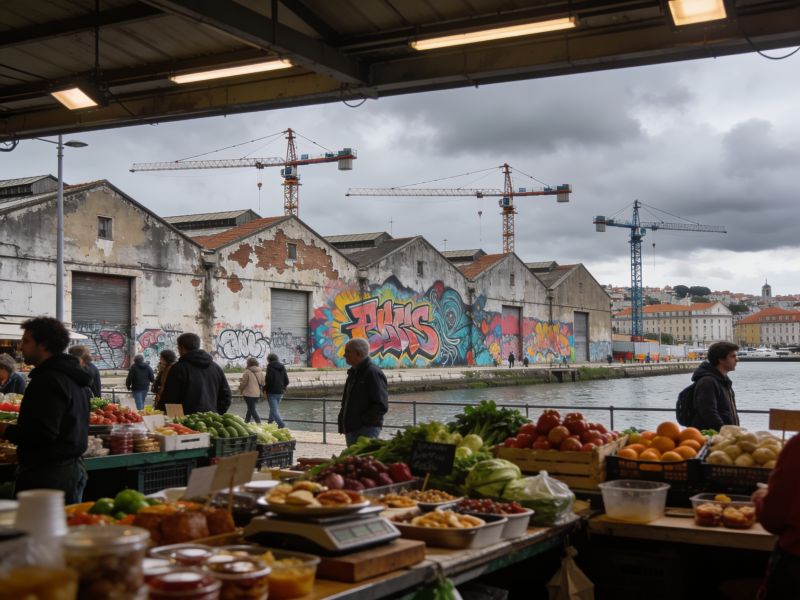
average rents have climbed roughly 60%, yet nearly a quarter of residents still qualify for social housing. That gap defines daily life here.Urban regeneration in Marvila leans heavily on its industrial bones. The massive Comporta warehouse, once a grain silo。now hosts tech meetups and a weekend food market. Nearby, the Marvila Library—housed in a converted pasta factory—has become a quiet hub for freelancers. These adaptive reuse projects aren't just aesthetic;they've drawn a younger, creative crowd. But critics argue the new amenities serve newcomers more than long-timers. A community center run by the parish council offers free coding classes, yet attendance skews toward recent arrivals. 'We need jobs for the guys who used to work the docks,' a local butcher told me。wiping his counter. 'Not another co-working space.'Transport remains Marvila's sharpest contradiction. The new Cais do Sodré-to-Maravila ferry cuts commute times。and a planned metro extension promises more. But bus routes through the parish's interior are sparse, and parking is a daily battle. On a rainy Tuesday, I watched a delivery driver circle the same block four times. 'Everyone talks about the future,' he shrugged. 'I just need a spot.' That friction—between big infrastructure and small frustrations—shapes the mood.What strikes me most about Marvila is its refusal to be polished. Street art covers entire facades, but so do political slogans against eviction. The riverside promenade is beautiful, yet a few meters inland, abandoned lots still collect weeds. It's a place where a Michelin-starred chef can open a restaurant next to a family-run hardware store that's been there since 1962. Marvila isn't becoming another Alfama or Príncipe Real. It's negotiating its own terms, unevenly and loudly. For now。that messy authenticity is its greatest asset—and its most fragile one.